




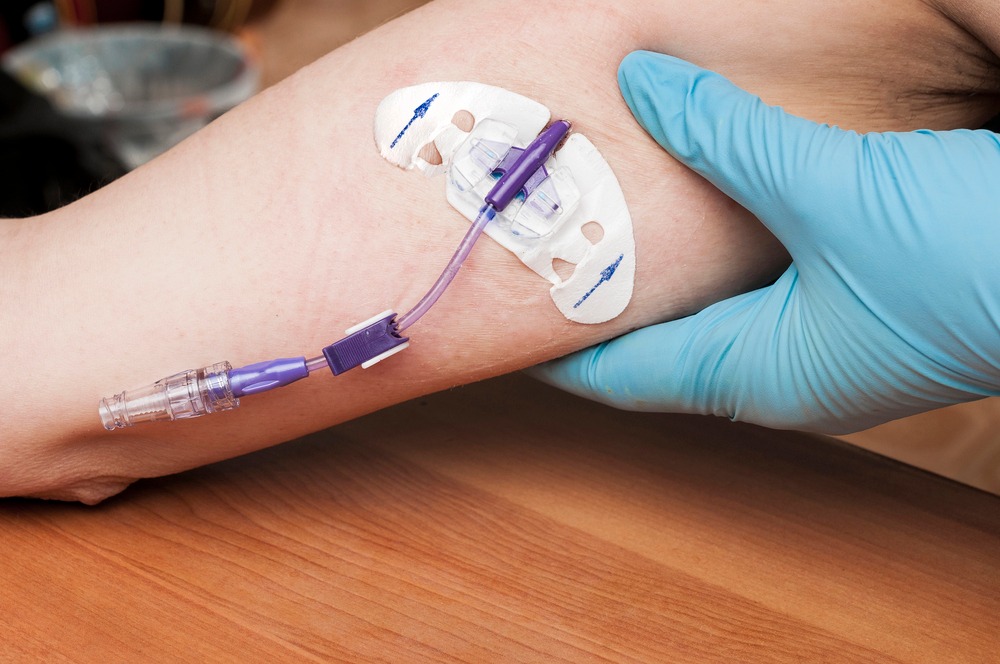
Advanced Ultrasound-Guided PICC Placement & Certification Training
Master the gold standard of long-term vascular access. The Bevel Up™ Tier 3: PICC Insertion Program is an elite, evidence-based training course designed for clinicians looking to achieve advanced competency in ultrasound-guided Peripherally Inserted Central Catheter (PICC) placement.
As healthcare shifts toward specialized vascular access teams, mastering PICC line insertion is one of the most high-value skills a clinician can possess. This comprehensive program bridges advanced clinical theory with rigorous procedural training, empowering learners to place central lines safely, consistently, and efficiently while minimizing patient risk and maximizing catheter longevity.
About This Program
The Bevel Up™ Tier 3 curriculum provides a deep dive into the technical skills, psychomotor coordination, and critical clinical judgment required to establish central venous access. This is an all-inclusive training pipeline that covers everything from preliminary upper extremity vessel mapping to real-time tip navigation and final confirmation.
Through a structured blend of interactive didactic instruction, high-fidelity simulation, and deliberate hands-on practice, participants will master the Modified Seldinger Technique (MST) under strict sterile conditions. Our curriculum places a heavy emphasis on Vessel Health and Preservation (VHP) and the mathematical application of Catheter-to-Vessel Ratio (CVR) principles to proactively eliminate deep vein thrombosis (DVT) and other catheter-related complications.
Key Highlights:
- Modified Seldinger Technique (MST): Master the industry-standard wire-guided insertion method using advanced introducers and dilators.
- Maximal Sterile Barrier Precautions: Learn flawless sterile technique, full-body draping, and infection prevention protocols to maintain zero-infection targets (CLABSI prevention).
- Catheter-to-Vessel Ratio (CVR): Learn to use ultrasound to measure internal vessel diameters, ensuring the catheter occupies less than 45% of the internal lumen.
- Tip Navigation & Confirmation: Understand the latest technologies for real-time tip tracking and ECG-based or radiographic tip confirmation.
Learning Objectives
Upon successful completion of this advanced vascular access training program, learners will be able to:
- Perform Advanced PICC Insertion: Confidently execute ultrasound-guided PICC placement from initial assessment to final securement.
- Maintain Maximal Sterility: Demonstrate absolute mastery of maximal sterile barrier precautions to eliminate central line-associated bloodstream infections (CLABSIs).
- Map Advanced Vascular Anatomy: Identify and select the ideal target vessel (Basilic, Brachial, or Cephalic vein) while avoiding adjacent arterial and nerve structures.
- Execute the Modified Seldinger Technique: Perform smooth, safe guidewire advancement, tract dilation, and sheath introduction using the MST framework.
- Calculate Catheter-to-Vessel Ratios (CVR): Apply precise ultrasound measurements to ensure optimal catheter sizing, protecting venous flow and reducing thrombosis risks.
- Measure & Track Catheter Path: Accurately measure external anatomical landmarks to determine correct catheter insertion length and predict ideal terminal tip placement.
- Navigate & Confirm Tip Placement: Utilize advanced navigation principles to ensure the catheter tip resides precisely in the lower third of the Superior Vena Cava (SVC) or at the Cavatrial Junction (CAJ).
- Prevent & Manage Complications: Proactively troubleshoot insertion hurdles, including venous spasm, malpositions, hematomas, and air embolisms.
- Apply Evidence-Based Securement: Utilize advanced engineered securement devices and antimicrobial dressings to ensure line stability and site protection.
- Validate Advanced Competency: Pass rigorous, simulation-based technical and clinical judgment assessments to validate central venous access capability.
Who This Course Is For
This elite tier training is specifically engineered for licensed professionals looking to transition into a specialized vascular access role or formalize their institutional central line privileges. It is highly recommended for:
- Vascular Access Specialists & Infusion Nurses: Seeking formal PICC line training and technical certification validation to expand their clinical scope.
- Registered Nurses (RNs): Looking to advance into dedicated PICC placement teams or autonomous vascular access roles.
- Critical Care & Emergency Clinicians: ICU, CCU, and trauma nurses or advanced practice providers (NPs/PAs) requiring independent central access capability.
- Interventional & Procedural Teams: Radiology technicians, anesthesia assistants, and surgical team members supporting vascular suites.
- Healthcare Organizations & Hospital Systems: Seeking to build or standardize an internal PICC placement team to decrease reliance on outsourced interventional radiology (IR) resources, improve patient throughput, and lower costs.
Prerequisite Note: Because this course builds heavily on real-time needle guidance, participants must possess strong baseline proficiency in ultrasound-guided peripheral IV (USGPIV) insertion (Tier 2 or equivalent) prior to enrolling.
Why Choose Bevel Up™ for Central Access?
Placing a central venous access device requires an uncompromising commitment to safety, precision, and sterile technique. The Bevel Up™ Tier 3 program turns competent clinicians into highly specialized vascular access assets. By mastering the physics, anatomy, and mechanics of PICC placement, you will protect your patient's venous health while dramatically elevating your clinical profile.
Ready to advance your career and master ultrasound-guided PICC placement? Reserve your seat in our next advanced clinical cohort or contact us to discuss institutional competency validation programs.